This gutters winter checklist covers what to clear, check and fix before the cold, wet weather arrives. The most important step is a thorough clean once the leaves have fallen, followed by a look at the brackets, joints and downpipes. Do the checks from the ground, and leave anything at height to professionals.
Why winter is hard on gutters
Any sensible gutters winter plan starts by understanding what the weather does to the system.
Winter combines the three things gutters like least: heavy rain, strong wind and freezing temperatures. Leaves and moss that built up in autumn soak up water and add weight, while overnight frost turns standing water to ice. Ice expands, pushes at joints and pulls on brackets, so a gutter that was coping in October can fail in January.
A little preparation before December means you are not trying to fix overflow in the dark in the middle of a storm. If you want to read about the risks of ice in detail, see can frozen gutters cause damage.
The gutters winter checklist
1. Clear the leaves and debris
Wait until most leaves have fallen, then clear the full length of every gutter, including the ones over porches, garages and extensions. Getting it timed right is covered in the best time of year to clean gutters. Clearing the channel prevents water from freezing in a dense, heavy mat.
2. Check the outlets and downpipes
Outlets are where blockages begin. Make sure each one is open, then check that water reaches the bottom of each downpipe and flows away. A downpipe that spills at the wrong place or is blocked will push water back into the gutter.
3. Look for leaks at joints
The easiest way is to watch the gutters during rain. Drips from seams, stains below unions and wet patches on the wall all point to a joint that needs attention. Our guide to leaking gutter joints explains the common fixes.
4. Check brackets and alignment
Look along each run from the ground. Sagging sections, gaps against the fascia or gutters that tilt away from the wall suggest loose brackets. A gutter has to hold wet leaves, rain and sometimes snow, so worn fixings should be dealt with before winter.
5. Inspect the fascias and soffits
Look for peeling paint, dark stains or soft areas on timber boards. Early signs of overflow often show here first. Cleaning the boards also lets you spot problems earlier; see how to clean uPVC fascias and soffits.
6. Deal with overhanging branches
Branches that scrape the roof or hang over the gutters shed leaves all winter and drop twigs in storms. Have them trimmed if possible, using a qualified tree surgeon for anything large or high up.
7. Check the roof edge for moss
Moss on the lower tiles will drop into the gutter all winter. If you have heavy moss, consider roof cleaning in spring so the problem does not recur; see roof cleaning and moss removal.
Quick reference table
This summary of the gutters winter jobs shows what to do, when, and whether it can be done safely without climbing.
| Job | When | Can you do it from the ground? |
|---|---|---|
| Clear leaves and debris | Late autumn | With pole-based tools, yes |
| Check outlets and downpipes | Late autumn | Mostly yes |
| Watch for leaks in rain | First wet days | Yes |
| Check brackets and sagging | Late autumn | Visual check, yes |
| Inspect fascias and soffits | Autumn | Visual check, yes |
| Trim overhanging branches | Winter | Professional tree surgeon |
| Re-check after storms | Throughout winter | Yes |
During winter: what to keep an eye on
Once the checklist is done, the season itself is mostly about observation. A few minutes with a torch and a coat during the first heavy rain tells you whether the work has paid off. Watch each downpipe discharge, look along the front of the gutters for drips, and note anywhere water runs down the wall. Jot down what you see, or take photos, so you can compare the same spots after the next storm and catch any slow changes.
After each storm, take a quick look from the ground. Check for sections knocked out of line, debris blown into the channel and water running down the walls. Do not climb up on icy days. If gutters overflow during a freeze, never try to chip ice out of them, because that can crack the plastic. Where a blockage causes real trouble, get help instead.
Storm damage is a common reason for winter call-outs, and our article on storm damage to gutters tells you what to look for.
Is it safe to do this yourself?
Parts of this gutters winter checklist, such as watching the gutters in rain and looking for stains, are simple and safe from the ground. Climbing a ladder is a different matter. Ladders cause many household injuries each year, and wet leaves, frost and wind make things worse. Work above single storey is best left to professionals, and gutters above conservatories and extensions need specialist access. Read is it safe to clean gutters yourself before you decide.
How SuperClean Gutters can help
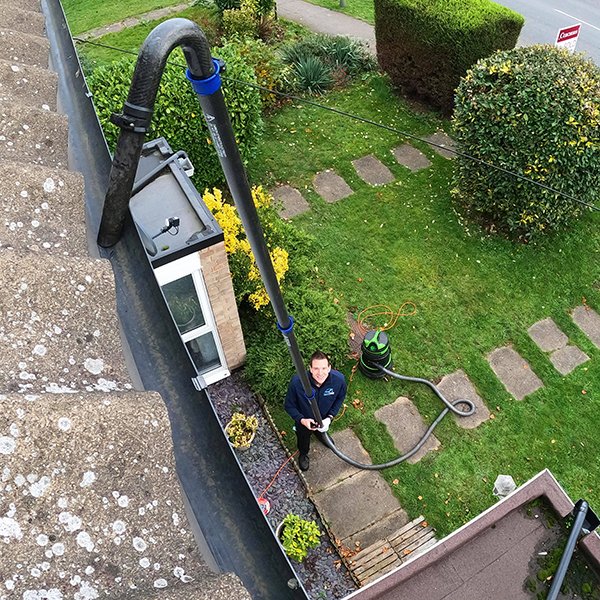
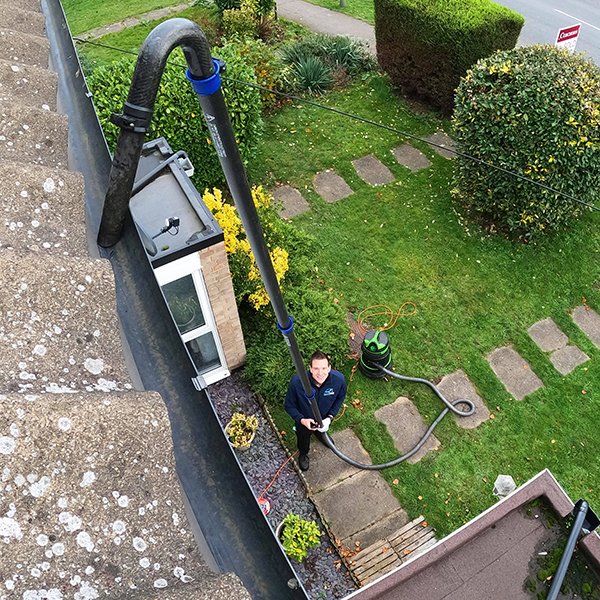
Our gutter cleaning service uses a commercial gutter vacuum on poles reaching up to 12 metres (about 40ft) from the ground, and a camera lets you see before and after photos. We clear downpipes from ground level and hand-clear deep debris and outlets from a safe ladder where needed. We cover Ascot, Chertsey and Ripley and the rest of the area on our areas we cover page.
If the check turns up a leaking joint or sagging section, we can follow up with gutter repairs, using new parts. We are fully insured and our work is backed by a service guarantee.
Call or WhatsApp 07368 590868 or send photos on WhatsApp for a free quote.
Frequently asked questions
How do I prepare my gutters for winter?
Clear all leaves and debris once the trees are bare, check outlets and downpipes run freely, and look for leaking joints, sagging runs and loose brackets. Trim overhanging branches if you can, and check the fascias for early damp. A professional clean from the ground is the safest way to do it.
When should I clean my gutters before winter?
Late autumn is ideal, usually November, when most of the leaves have fallen. Cleaning too early means they fill again. If the weather turns very cold, book sooner rather than later, as frost and icy conditions make access difficult and sometimes unsafe.
Will frost damage my gutters?
It can. Water standing in a blocked gutter freezes and expands, stressing joints and brackets. Ice also adds weight, and in severe cases a gutter can crack or pull away from the fascia. Keeping the channels clear lets water drain before it freezes.
Do I need to clean gutters again in winter?
Not usually, if they were cleaned properly in autumn. A quick look after storms is enough. If they overflow or a downpipe stops running, arrange a clear-out. Persistent winter blockages may point to a fault, such as a poor fall, that a clean alone will not fix.