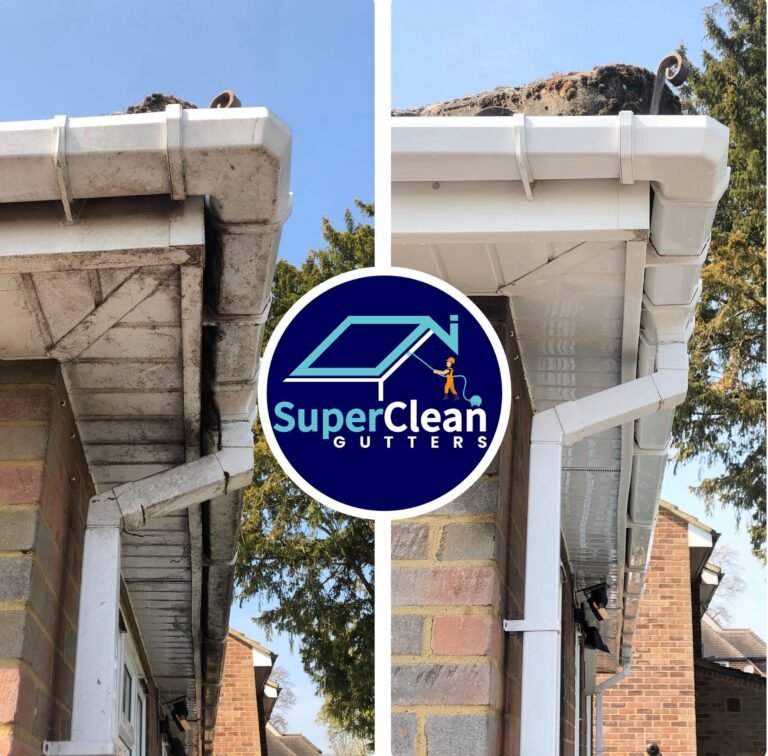
After high winds, check for storm damage gutters are prone to from the ground: sagging runs, sections that have slipped or come away, cracked or missing joints, bent brackets, loose downpipes and debris dumped in the channel. Look from a safe spot on the ground, photograph anything odd and do not climb up in wind or wet weather.
Why storms are hard on gutters
Gutters are lightweight, long and fixed at the edge of the roof, which is the most exposed part of the house. Strong gusts get under the front edge and flex the whole run. Fallen branches and flying debris strike them, and heavy rain fills them with leaves in a matter of minutes. A system that was already carrying a little silt or a slightly loose bracket can fail in a gale when a clean, tight one would have survived.
A ground-level checklist after high winds
Storm damage gutters suffer is usually easy to spot once you know where to look. Walk round the whole house and look up at each elevation, taking your time on the sides that face the prevailing wind. Binoculars are handy on taller properties. Pay attention to the following.
| What to look for | What it usually means |
|---|---|
| A gutter run that dips or has dropped at one end | Failed or bent brackets, or heavy debris and water weighing it down |
| Gaps at joints or sections pulling apart | Joint seals lifted or clips snapped under flexing |
| A visible crack or snapped corner | Impact from a branch or brittle plastic giving way |
| Downpipe pulled away from the wall | Loose clips or a fixing that has pulled out of the brickwork |
| Tiles, ridge pieces or fascia boards out of place | Roof damage, which needs a roofer |
| Branches, leaves or other debris in the channel | Blockage risk and extra weight on the brackets |
| Fresh water stains on the wall below | Overflow or a leak that has started |
What to check inside and around the house
Do not stop at the gutters. Look for wet patches on ceilings near external walls, marks that were not there before or drips in the loft at the eaves. Outside, check whether water is landing on the wall or ground in a place it did not before. Fallen pieces of gutter on the lawn or drive should be picked up carefully, since cracked plastic can have sharp edges.
Keep notes and take dated photographs. If you decide to make an insurance claim for storm damage, a clear record of how things looked afterwards helps. Policies differ a good deal, so check yours for what it covers and what it excludes.
When to leave it to someone else
Take the following seriously and do not try to fix it yourself:
- Anything that needs a ladder above single-storey height.
- Gutter or fascia hanging loose above a path, door or driveway.
- Damage near overhead power or telephone lines.
- Roof tiles that have moved, which is a job for a roofer.
If something is hanging and might fall, keep people and cars away from the area until it is dealt with. A temporary cordon with a bit of tape and a word to the household is better than waiting.
How storm damage gutters are repaired
The repair depends on what failed. Often it is simpler than people expect, because the system is made of standard parts.
- Re-fixing. Sagging runs are lifted back to the correct fall and held with new brackets at the right spacing.
- Replacing joints. A damaged joint is replaced with a new part, not just sealed over, which gives a longer-lasting result.
- Swapping sections. A cracked length or a broken corner is cut out and a new piece fitted.
- Refitting downpipes. New clips or brackets re-secure a pipe that has come away.
- Clearing out debris. Branches and leaves are removed so the system can drain.
We carry common gutter parts on the vans, which helps us sort out many faults in a single visit. Our guide to sagging gutters and how they are fixed goes into more detail on one of the most frequent storm problems. If the damage is so widespread that patching is not sensible, see our article on whether to repair or replace gutters.
Preparing for the next storm
Gutters that are clean and well fixed cope far better with weather. A full channel is heavy, puts strain on the brackets and can make a loose section more likely to give way, so clearing the gutters before winter makes sense. We cover this in our winter gutter checklist. Cutting back branches that overhang the roof also helps.
Our team repairs gutters across Addlestone, Sunningdale and Dorking, along with many other places on our areas we cover page. If the gutters are blocked as well as damaged, gutter cleaning can be done in the same visit, subject to the job.
How SuperClean Gutters can help
Our gutter repairs cover cracked sections, failed joints, loose or sagging runs and downpipes that have come away. Damaged joints are replaced with new parts, and the team is fully insured, with work backed by our service guarantee. If the system is beyond repair, we also fit new uPVC guttering.
Send your address and a few photos of the damage and of each guttered side, taken from the ground, and we will usually quote the same day.
Call or WhatsApp 07368 590868 or send photos on WhatsApp for a free quote.
Frequently asked questions
How do I know if my gutters are damaged after a storm?
Look for sagging, gaps at joints, cracks, loose downpipes and water overflowing or running down the wall. Check from the ground only. If rain sprays from a joint or the gutter is hanging away from the fascia, it has been damaged and should be repaired soon.
Is storm damage to gutters covered by home insurance?
Storm damage gutters suffer may be covered, but it depends on your policy. Some buildings policies cover storm damage, often with an excess, while others have conditions or exclusions, such as for wear and tear. Read your policy documents or ask your insurer before you arrange repairs, and keep photographs.
Can I fix a storm-damaged gutter myself?
Small jobs at ground-floor height, such as re-clipping a low downpipe, may be manageable if you are careful and the ladder is properly footed. Anything above single storey is best left to professionals, because working at height in or after bad weather is risky.
Should I get my gutters checked after every storm?
A quick look from the ground after any serious storm is sensible. You do not need a professional every time, only when you spot damage, overflow or a change from how things normally look. Annual cleaning will also give a chance to spot weak points.