Whether to repair or replace gutters comes down to how widespread the problem is and how old the system is. If one joint, bracket or section has failed and the rest is sound, a repair makes sense. If the gutters are cracked, sagging along their length or leaking in several places, replacing them is usually the better long-term choice.
When repair is the sensible option
Gutters are made of simple, replaceable parts, so a lot of faults can be dealt with without touching the rest of the run. Repair tends to suit situations where:
- One or two joints are leaking and the seals are the only thing that has worn out.
- A few brackets have loosened or snapped and the run has dropped in one place.
- A single section, corner or stop end has cracked.
- A downpipe has come away from the wall and just needs re-fixing.
- The gutters are generally in good condition and the problem started recently, for example after a storm.
Repair is quicker and less disruptive, and it avoids replacing parts that still have plenty of life in them. It works best when the damaged parts are replaced with new ones, not just sealed or patched. If you want a closer look at the typical causes, read our guides to leaking gutter joints and sagging gutters.
When it is time to replace
There comes a point when patching becomes a false economy. Signs that new guttering is a better answer include:
- Plastic that has turned brittle, chalky or faded and cracks when touched.
- Leaks at many joints, not just one.
- Sagging along most of a run, with the fall wrong from one end to the other.
- Rusted cast iron or corroded metal that flakes or has holes.
- Repairs that keep failing, with each one costing time and money.
- Damaged fascia boards behind the gutters, since the new system will need solid fixings.
- An old profile that no longer matches available parts, making repairs awkward.
Our article on how long uPVC gutters last gives a general idea of lifespan, though a lot depends on sun exposure, trees nearby and whether the gutters have been cleaned regularly.
A quick comparison
| Question | Points to repair | Points to replace |
|---|---|---|
| How many faults? | One or two, in one place | Several, in different places |
| Condition of the plastic | Sound and flexible | Brittle, cracked or badly faded |
| Shape of the run | Straight, with a local sag | Sagging or uneven overall |
| History | First problem, or new damage | Repeated repairs that keep failing |
| Fascia behind it | Solid | Soft or damaged |
| Disruption | Minimal | A larger job, but a fresh start |
Factors that affect the decision
Age and material
A twenty-year-old system of brittle plastic is a different proposition from a newer set with one broken clip. If you are weighing materials, our post comparing uPVC, aluminium and cast iron gutters may help.
The condition of everything behind it
A gutter is only as good as its fixings. If the fascia is soft or rotten, new brackets will not hold, and the board needs attention first. Repairing gutters on a failing fascia is rarely worth it.
Whether the cause has been tackled
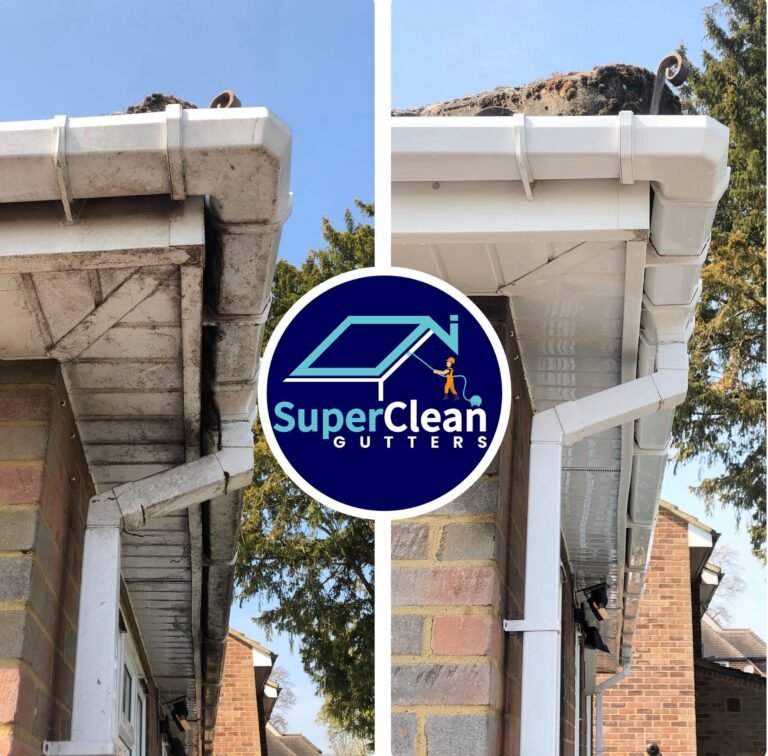
Sometimes the gutters look worse than they are. A blocked run that overflows for years can leave stains and make everything look tired. After a proper clean, it may turn out that only a few parts need fixing. For that reason it can help to have the gutters cleaned before deciding.
Budget and plans for the house
Repair costs less in the short term, and replacement costs less over the long run if repairs keep failing. If you are about to repaint, re-render or sell, new gutters may make sense. Read our guide to what affects the cost of new guttering for what affects the price, and remember we do not give a figure until we have seen your photos.
How to get a straight answer
- Look from the ground. Note sagging, gaps, cracks, stains and any plants growing in the channel.
- Take photos. Include every guttered side, plus close-ups of the worst areas.
- Do not climb up. Work above single storey height is best left to professionals.
- Ask for an honest view. A reputable firm should tell you if a repair will do, even if a bigger job would earn them more.
- Compare like with like. Make sure each quote says what parts are being replaced and what is included.
We would always rather fix what can be fixed. If we think a system is past saving, we will say so and show you why.
Where we work
We repair and replace gutters across Surrey, including Hersham, Staines-upon-Thames and Reigate. The full list is on our areas we cover page. When a complete refit is the right call, our gutter installation service fits new uPVC guttering.
How SuperClean Gutters can help
Our gutter repairs team replaces damaged joints with new parts, re-fixes loose and sagging runs and carries common gutter parts on the vans. If it makes more sense to repair or replace gutters across the whole house, we will explain why and give you a clear quote. The team is fully insured, and our work is backed by our service guarantee.
Send your address and photos of every guttered side, taken from below, and we will usually quote the same day.
Call or WhatsApp 07368 590868 or send photos on WhatsApp for a free quote.
Frequently asked questions
How do I know if I need new gutters?
Look for brittle or cracked plastic, leaks at several joints, a run that sags along most of its length and fascia boards that are soft. One of these on its own may be repairable. Several together usually mean the system is near the end of its useful life.
Is it cheaper to repair or replace gutters?
A repair costs less at the time, but not if the system keeps failing. The better question is how many problems there are and how old the gutters are. A site visit or good photos are needed to give a realistic quote for either option.
Can you repair part of a gutter run?
Yes. Sections, joints, corners, stop ends and brackets can be replaced individually, provided matching parts are available and the rest of the run is sound. If the profile is discontinued or the plastic has aged badly, a new run may be a neater answer.
Should I clean my gutters before deciding?
It often helps. Debris and overflow staining can hide the real condition of the gutters, and blocked runs put extra stress on joints and brackets. Once the system is clear, it is easier to see what is genuinely damaged and what simply needs cleaning.